
Picture yourself sitting in class in New York or London. The only thing between that dream and reality is paper work. For study abroad applications, the fastest way to lose time is submitting the wrong documents or the wrong version.
In March 2026, you’re in prime planning season for many Fall 2026 intakes. When you have a clear mindset, you can prep without panic. This guide breaks everything into two groups: university documents and visa documents, plus the extra papers that help you arrive smoothly.
Keep reading for a simple checklist approach, a realistic timeline, and tips that prevent common mistakes.
Essential Documents to Nail Your University Application
University applications usually ask for the same building blocks. Still, each school has its own rules about format, seals, and deadlines. If you’re unsure, use a checklist like study abroad application checklist for 2026 to compare what you have versus what you’re missing.
Most university “must-have” documents fall into five areas: academics, test scores, your story, endorsements, and your resume. Think of it like a filing cabinet. Each tab supports your chance of admission.
Here’s the core set universities ask for:
- Academic records (your grades over time)
- Standardized test scores (English, and sometimes GRE/GMAT)
- SOP or personal statement (your goals and fit)
- Recommendation letters (LORs) (proof from someone else)
- Resume or CV (your activities and experience)
Academic Transcripts and Certificates That Prove Your Grades
Let’s start with the most common thing: transcripts and certificates. For many applicants, you’ll submit your 10th and 12th mark sheets or report cards. If you’re applying for a bachelor’s degree, your high school documents matter most.
If you’re applying for master’s programs, you’ll also need your bachelor’s transcripts. Some schools ask for your degree certificate too. If you haven’t graduated yet, you may use a provisional or expected graduation letter.
Most universities also care about proof format. That means official copies, signatures, school seals, and clear details. If the original documents aren’t in English, you’ll likely need official English translations. Always follow the university’s instruction on who can translate them.

A simple way to understand this: your study abroad transcripts show you can handle college-level work. Your certificates confirm you completed the required level.
Quick tip: scan everything as PDF, then store both your originals and digital copies. If an upload fails, you’ll thank yourself.
Test Scores to Show Your English and Academic Skills
Next come test scores. If a program teaches in English, it usually requires proof you can follow lectures and write papers.
For English, look for IELTS or TOEFL. For graduate programs, you might see GRE or GMAT, especially for competitive or business-related tracks. Some universities waive tests for certain applicants, but you can’t assume a waiver.
Here’s a practical timing rule: take tests 6 to 8 months early. That gives you time for retries, score delays, and retakes if your first attempt misses the target. It also helps you finish your SOP and LOR requests calmly.
Think of IELTS like a “spoken-and-written check.” It tests if you can communicate clearly. TOEFL measures similar skills, but with a different test style.
Also remember: score needs vary by university and program. So, check the department page, not just a general admissions page.
If you want a document-driven checklist for US applications specifically, see US admission documents checklist. It’s useful for spotting what applicants often forget.
Statement of Purpose and Recommendation Letters That Stand Out
Your SOP (statement of purpose) is your personal evidence. It explains why you want this program, why this school fits, and what you plan after graduation.
Keep it focused. A strong SOP reads like a clear timeline. You describe what you’ve done, what you’ve learned, and what you want next. Avoid copying. Admissions teams can spot recycled phrases.
Many applicants write about “interests,” but strong SOPs show impact. For example, instead of “I like data,” you can write about a project you built. Then connect it to the program courses you want.
Now your recommendation letters. Most schools ask for 2 or 3 LORs. Choose recommenders who can describe your work, not just your personality. Good recommenders write specific examples: a paper you improved, a team project you led, or a class where you showed strong effort.
Give each recommender your resume and a short draft of your SOP goals. Then send them submission dates early. Stress makes letters weaker.
Your Resume or CV: A Snapshot of Your Strengths
A resume or CV helps the committee place you on the map. For student applications, many universities prefer a 1 to 2 page CV. Keep it clean and readable.
Include your:
- Education (with dates)
- Skills (only relevant ones)
- Experience (jobs, internships, research)
- Projects (especially if they match the program)
- Awards (optional, but helpful)
Tailor your resume to the program. If you’re applying for engineering, highlight engineering projects. If you’re applying for business, show leadership, results, and measurable outcomes.
A good resume doesn’t repeat your SOP line-by-line. Instead, it supports it. Your SOP tells your story. Your resume provides proof.
Student Visa Documents to Get You Across the Border
Once you get accepted, the next phase starts: visa documents. This is where details matter most. If you’re missing proof or using outdated forms, delays can follow.
Also note how visa requirements vary by country. Some rules are strict about timelines. Others care most about finances. However, one thing stays consistent: use the official government guidance for your country.
For the US, realtime updates show that the path depends on getting accepted by an SEVP-certified school that issues Form I-20. You then submit DS-160 and attend an interview in many cases. In 2026, there are also notes about stricter checks and more social media vetting for some applicants.
If you want a process walkthrough, read USA F1 student visa 2026 guide. It helps you understand what the steps feel like, end-to-end.
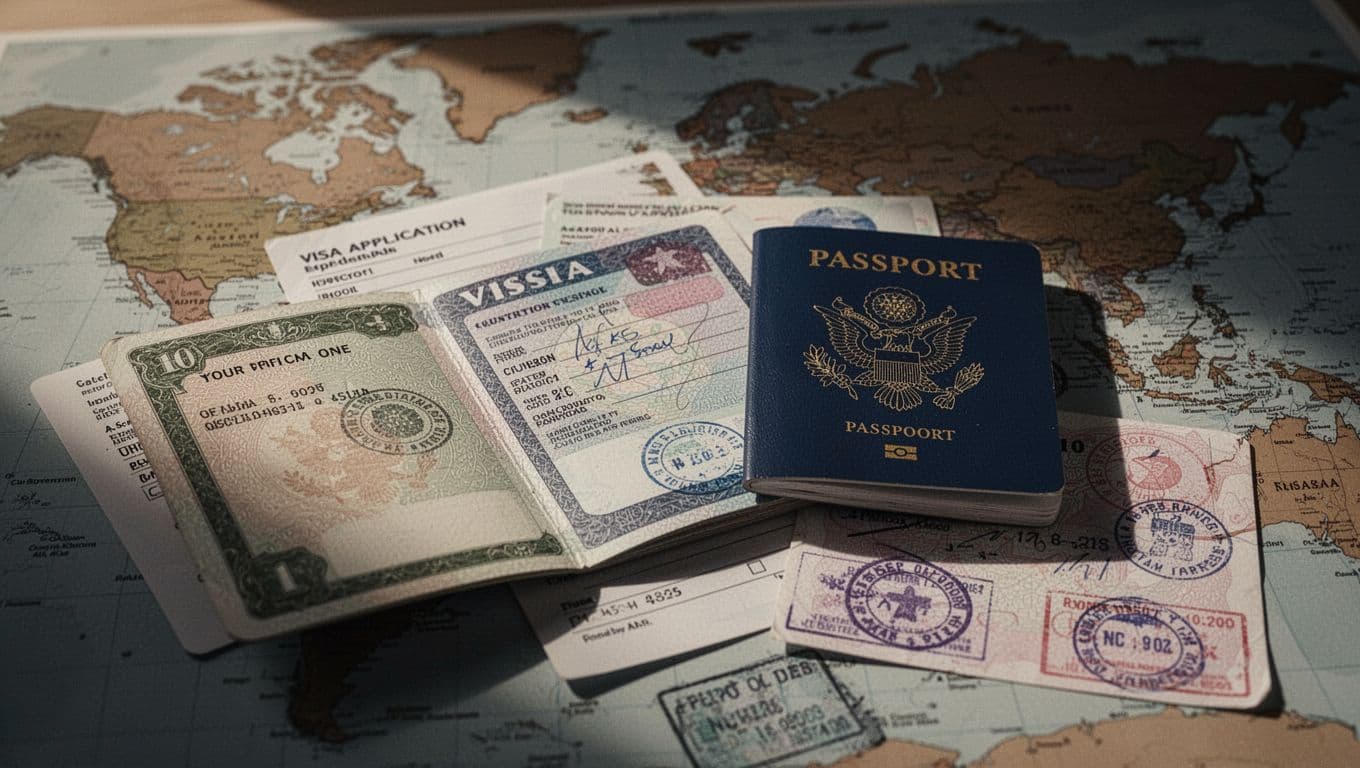
Passport, Forms, and Country-Specific Visa Needs
Your passport is the foundation. Many countries expect your passport to stay valid for at least 2 years beyond your program end date. Always check the exact rule for your destination.
Then you handle forms. For example, the US uses the DS-160 and relies on your I-20 issued by the school. Other countries use their own systems and documents after acceptance, such as the UK Student Visa documentation, Canada’s study permit process, and similar paperwork for Australia and Germany.
A big gotcha: avoid third-party sites that look like official portals. They can cost money or give wrong steps. It’s safer to follow the official application instructions for your country, even if the process feels slower at first.
Financial Proofs to Convince Officials You Can Pay
Finances are one of the top reasons for visa delays. You don’t just need money. You need proof that matches the story on your application.
Financial evidence often includes bank statements, income proof, and sponsor letters (if parents or guardians fund you). Some countries also accept loan letters or scholarship documents, depending on the case.
In the US, realtime guidance highlights that the minimum amount comes from your school’s I-20. So your proof should align with what the I-20 shows.
Financial documents should look consistent across dates, names, and amounts. If they don’t match, your application may face extra questions.
Health Insurance and Medical Papers for Peace of Mind
Health paperwork is another area where students lose time. Some countries require proof of insurance. Others may request medical checks or vaccination records.
Even when health rules seem unclear, plan early. Many insurance policies and medical appointments take time. So build in 1 to 2 months for health prep before travel.
If you take regular medication, keep a short list and bring your prescription info. That small step can prevent stress after arrival.
Extra Papers and Confirmation Docs for a Smooth Start
After acceptance, you may receive more documents than you expected. These items don’t replace your visa, but they help you confirm travel details and settle quickly.
Think of them like “arrival tickets” for your plan. If an embassy asks questions, you can show your timeline clearly.
Offer Letters and Acceptance Confirmations
Your offer letter matters. It shows you were accepted and sets the program details.
For the US, your I-20 plays a visa role, because it links your admission to your immigration paperwork. For other countries, you’ll receive a similar confirmation document after acceptance.
Save these files in two places. Use a folder on your computer and a backup drive. Also print copies, because airports and processing centers sometimes need hard copies.
Travel and Accommodation Proofs to Hit the Ground Running
Some students think flights and housing are “optional.” Don’t assume that. Embassies and border officials may want to understand your plan.
Common items include a flight itinerary, housing contract, or proof of where you’ll live during the first part of your program. Also keep copies of your ID pages and any student ID documents if your school issues them early.
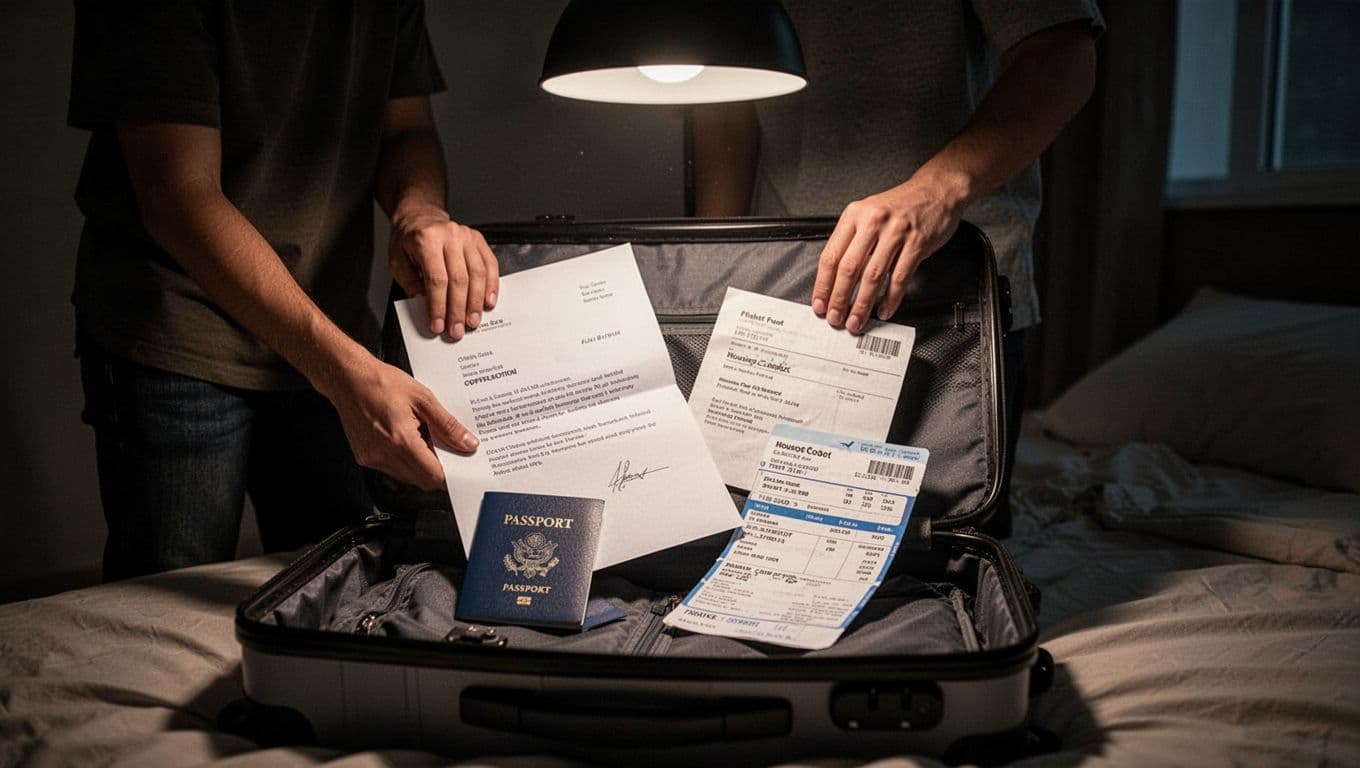
If you want a helpful “pack like a pro traveler” mindset, build your own study abroad packing list with the same mindset as your document checklist. Keep travel papers in one folder you can grab fast.
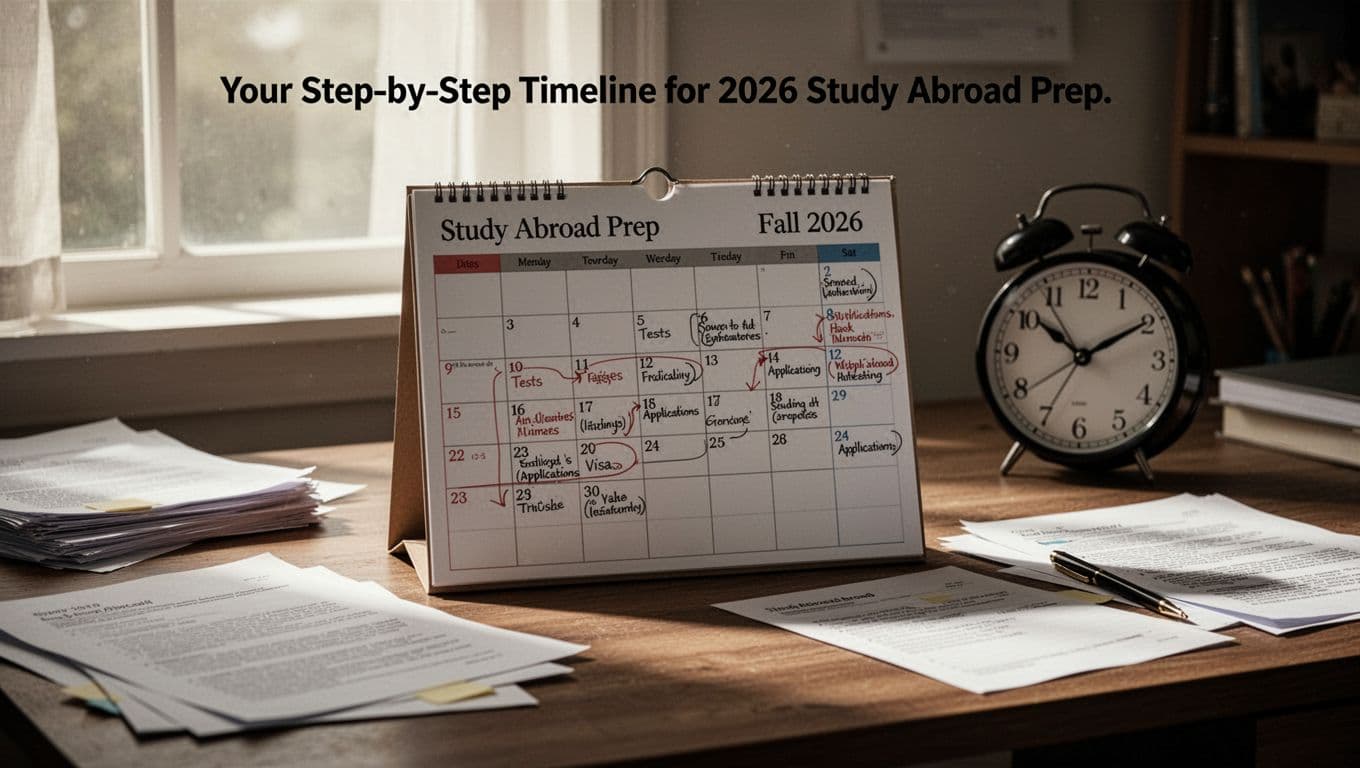
Your Step-by-Step Timeline for 2026 Study Abroad Prep
In March 2026, Fall 2026 prep is real. You’re past the “start whenever” stage. So use a timeline that matches how admissions and visa steps actually move.
Fall 2026 deadlines vary by country and university. For US universities, many top schools had early deadlines in late 2025, with regular deadlines in early 2026. For UK fall intake, UCAS deadlines often fall in January 2026 for major universities. Meanwhile, Canada’s fall deadlines often sit between January and March.
If you want one clear example of program deadlines, check program deadlines for study abroad. It shows how universities set their own dates.
Here’s a simple planning calendar for Fall 2026:
| Months | What to do |
|---|---|
| Nov-Dec 2025 | Get transcripts. Draft SOP. Pick LOR writers. |
| Jan-Feb 2026 | Finish applications. Take IELTS/TOEFL. Submit scores. |
| Mar-Apr 2026 | Get decisions. Accept offers. Request I-20 or CAS if needed. |
| May-Jun 2026 | Complete DS-160 (US) or visa forms. Pay fees. Book interview steps. |
| Jul-Aug 2026 | Attend visa interview. Book flights and housing. Prepare for arrival. |
Also, double-check every date in your documents. One wrong year can create delays. Use certified copies when required. And keep your documents in a single folder system by category.
Your best advantage is accuracy. When everything matches, the process feels faster.
Conclusion
Study abroad success starts with the right study abroad documents checklist 2026 mindset. University documents prove your academics, your tests, and your fit for the program. Visa documents then prove you’re ready to study, afford it, and travel with a clear plan.
Now that it’s March 2026, treat this like a priority task, not a future chore. Start by organizing your university papers, then shift your focus to visa prep as soon as you get acceptance.
Your adventure is still out there, waiting. But first, you handle the documents, one clear step at a time. What country are you applying to? Share it, and people can swap the best document tips.